

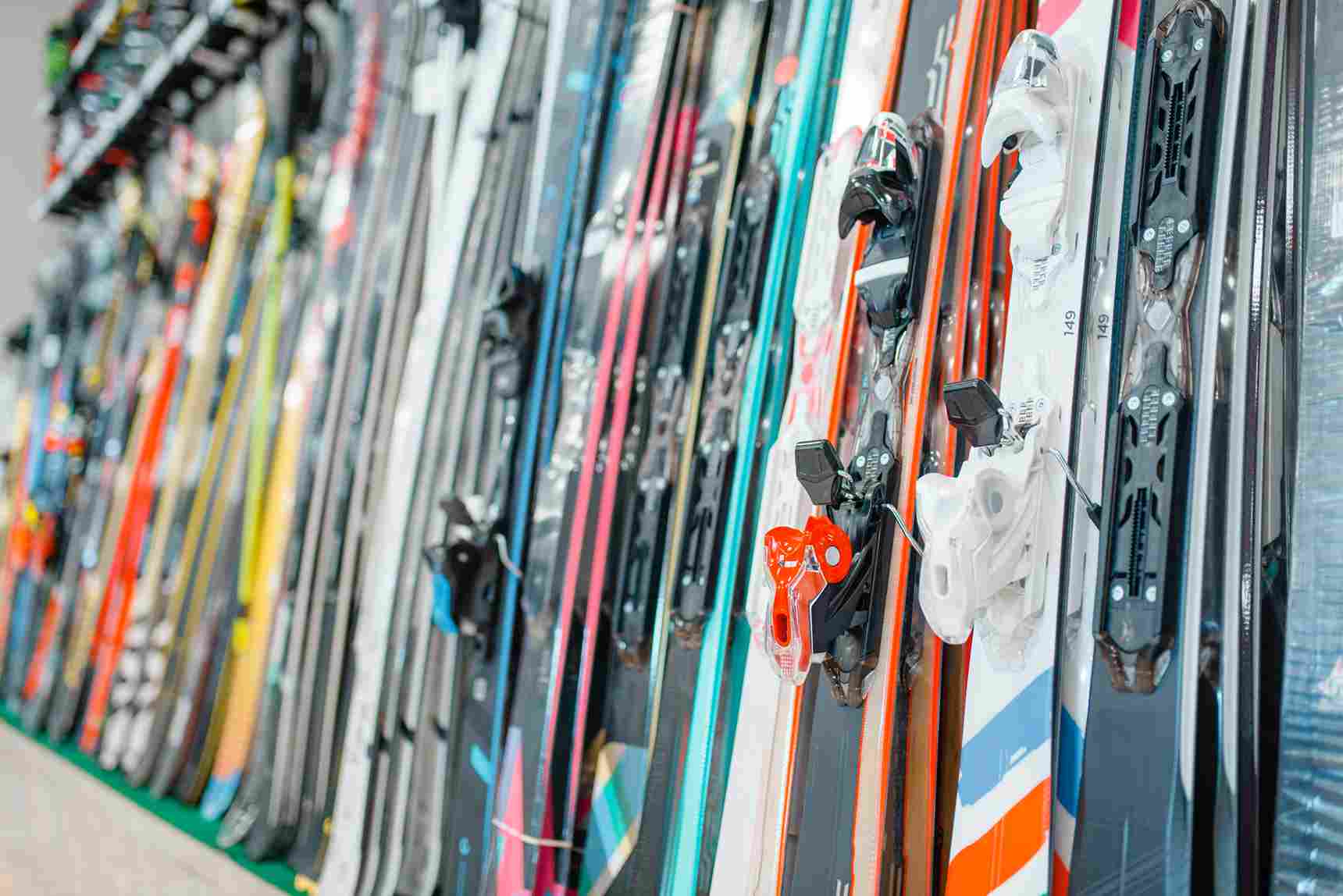
So, you’ve booked your ski holiday – flights, accommodation, maybe even ski lessons – but now comes the real question: should you rent or buy your ski equipment? It’s the classic skiing conundrum, especially for those of us in the UK who don’t have the luxury of a snowy mountain on our doorstep.
If you’re a seasoned skier heading to the Alps a few times a year, investing in your own kit might be appealing. But if you’re more of a ‘once-a-year, après-ski enthusiast’, then renting might be the way to go. Alternatively, there may be items of kit that you prefer to have for yourself, like a helmet.
There’s lots of factors to consider and it will also depend on your experience, how much cash you’re willing to part with and the importance you place on a sense of style. Let’s break down the options and help you decide if you should splash the cash on your own gear or stick with the rental shop.
What ski and snowboarding equipment do you need?
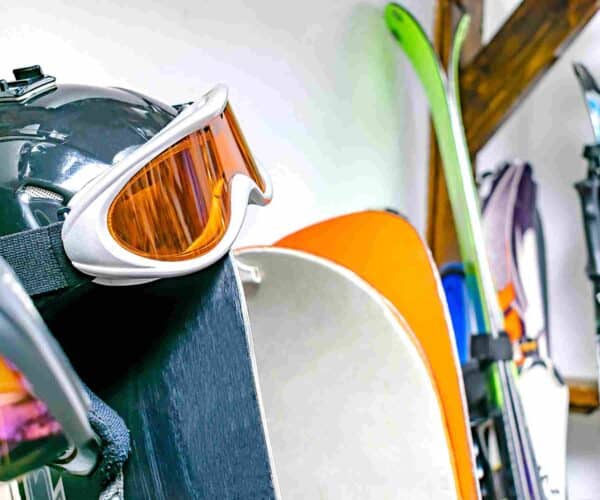
Before deciding whether to rent or buy, let’s talk about what you actually need to get down the slopes without looking like Bambi on ice.
Skiing Equipment:
- Skis & bindings
- Ski boots
- Ski poles
- Helmet
- Ski clothing
Snowboarding Equipment:
- Snowboard & bindings
- Snowboard boots
- Helmet
- Snowboarding
The pros and cons of buying ski or snowboard equipment
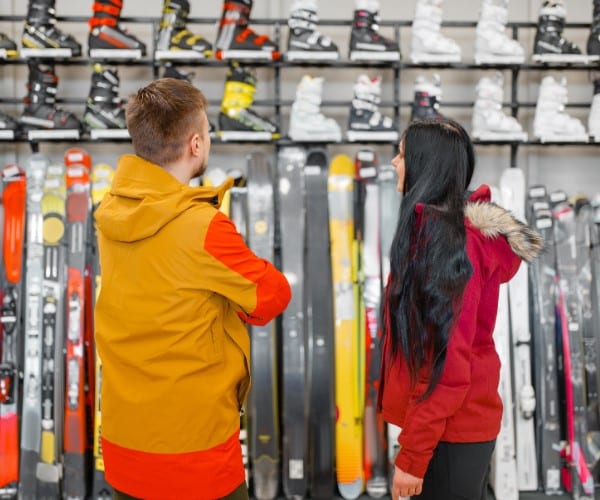
If you love skiing and plan on making it a regular part of your life, buying your own kit might be a game-changer. But before you rush out to your nearest ski shop, let’s weigh up the pros and cons.
Pros of Buying
Better performance
Owning your equipment allows you to become intimately familiar with its performance, which builds confidence on a variety of terrains. Over time, you’ll learn exactly how your skis or snowboard react to different conditions—helping you to refine your technique and make quicker adjustments on the fly.
Moreover, you have the freedom to choose gear that perfectly matches your preferred riding style, whether it’s powder skiing, freestyle, slalom, or all-mountain adventures. This tailored approach not only enhances your performance but also elevates your overall experience on the slopes.
Comfort
One of the biggest challenges on the mountain is finding ski boots that fit just right. Rental boots are designed to accommodate a broad range of foot shapes, which often means sacrificing comfort. When you invest in your own pair, you can opt for professionally fitted or custom-moulded boots that conform perfectly to your feet.
Much like breaking in a fine pair of leather shoes, your own boots will mould to your unique contours over time, significantly reducing discomfort and fatigue during long days on the slopes.
Personalised gear
Buying your own equipment means you can curate your entire setup to reflect your personal style and specific needs. From selecting a helmet and outerwear that match your aesthetic to choosing skis or a snowboard that complement your riding habits, every piece of gear is tailored for you.
Personalised gear lets you stand out while ensuring optimal functionality and durability. This customisation ensures that you’re not stuck with the tired, overused rentals that might not perform at their best.
Long-term savings
Although the initial investment in purchasing gear can seem steep, the cost savings become clear over time—especially if you ski or snowboard regularly. Renting every season can quickly add up, while high-quality equipment is built to last.
With proper care, a well-chosen pair of skis or boots can serve you for up to 10 years. Additionally, opting for second-hand gear can further reduce your costs, making ownership a more economically sound decision in the long run.
By investing in your own gear, you not only enhance your performance and comfort but also enjoy a personalised and cost-effective experience that pays dividends season after season.
Cons of buying
Expensive upfront cost
Investing in your own ski or snowboard setup can be a significant financial commitment. Quality skis, boots, and additional accessories from reputable brands often come with a steep upfront price, which might not be ideal for every budget.
Moreover, owning your equipment means accepting the responsibility of regular maintenance. For instance, skis typically need to be serviced at least once a year to ensure they remain safe, perform optimally on the slopes, and have a longer lifespan. This added maintenance can translate into additional ongoing expenses.
Hassle of travelling with gear
Transporting your own gear when you travel can be quite a hassle. Airlines frequently charge extra fees for ski bags or specialised equipment, which means you’ll likely need to invest in a durable ski bag to protect your gear during flights. Furthermore, the size and bulk of your skis can complicate ground transportation.
They might limit your options for car rentals or require you to opt for a larger vehicle, potentially increasing travel costs and adding an extra layer of logistical complexity to your trip.
Storage space
Not everyone has the luxury of ample storage at home, and bulky ski equipment can be particularly challenging to store. For those who only hit the slopes a few times a year, dedicating space for gear that is rarely used can be inconvenient. Without a proper storage solution, maintaining and protecting your equipment off-season can become an added concern.
Risk of theft
Leaving your gear unattended carries its own set of risks. Whether you’re stopping by a mountain restaurant or enjoying après-ski activities, there’s always the possibility that your equipment could be left unprotected and become a target for theft.
Damage risks in poor snow
Poor snow conditions can pose a danger to your own gear. When snow is scarce, the slopes might be littered with rocks and debris, increasing the risk of damage to the bottom of your skis. Such damage not only affects performance but can also lead to costly repairs, further adding to the overall expense of ownership.
The pros and cons of renting ski or snowboard equipment
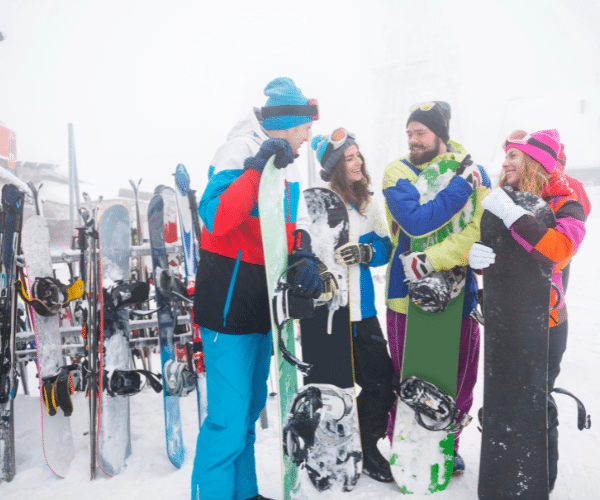
For those who only hit the slopes once a year, renting is a popular choice. It’s convenient, flexible, and avoids the hassle of transporting your gear.
Pros of renting:
Ideal for beginners
Renting is sensible when you’re still learning, as it lets you discover which type and style of ski suits you best.
No transport hassle
Pick up your gear at the resort and return it when you’re done. Many ski shops offer a locker service to store your equipment near the slopes, saving you from carrying heavy gear.
Try different skis
Rental shops usually carry a range of skis to suit various conditions, allowing you to upgrade or adapt as needed.
Tech support
If something breaks, the hire shop will typically fix or replace the equipment.
Cheaper for occasional skiers
For those who ski infrequently, renting a full setup is generally more cost-effective than buying.
Cons of renting:
Boot discomfort
Rental boots rarely fit perfectly, which can lead to sore feet and blisters and affect your performance.
Quality varies
You might end up with older, less responsive skis or a board that has seen better days.
Cost adds up over time
For frequent skiers, renting each time may become less economical, even with early booking deals.
The cost of your equipment is likely to be a deciding factor and there are pros and cons to both. Here’s an overview to provide an idea of the costs of hiring or buying.
How much does ski & snowboard equipment cost to rent?
Prices vary by resort and country, but here’s a rough guide for a week’s rental:
- Skis + bindings: £80–£200
- Ski boots: £40–£100
- Snowboard + bindings: £80–£180
- Snowboard boots: £40–£100
- Helmet: £10–£20 for a weekend (sometimes free with rentals)
How much does ski & snowboard equipment cost to buy?
- Skis + bindings: £250–£700+
- Ski boots: £150–£400+
- Snowboard + bindings: £250–£600
- Snowboard boots: £150–£350
- Helmet: £40–£100
Buying everything at once can be pricey, but many skiers build up their kit over time.
Where to buy ski & snowboarding equipment?
Buying in a ski resort:
You might decide when you’re out on a trip that now’s the time to invest in some gear.
Advantages:
- Professional fitting.
- Multiple shops to try.
- Some shops offer a test before buying.
Disadvantages:
- Likely to be more expensive, depending on currency exchange rates.
- You might feel rushed into a decision.
Buying in the UK:
Once you’ve booked your trip, trying on some gear might be part of the experience and you may find exactly what you need.
Advantages:
- Better prices.
- Less pressure on deciding.
Disadvantages:
- Can’t test in real conditions before buying.
- Fewer face-to-face shops to visit.
In both situations it’s worth looking out for end-of-season sales to grab a bargain!
So – should you buy or rent?
- Buy if: You ski or snowboard at least twice a year, want a personalised fit, and are in it for the long haul.
- Rent if: You’re a beginner, travel occasionally, or don’t want the hassle of transporting equipment.
- Best compromise: Buy your own boots but rent skis or snowboards until you’re sure what you want.
Either way, the most important thing is to enjoy your time on the slopes. Whether you want to focus on improving your technique, gaining confidence or trying some tricks having the right gear and equipment is essential but whether you rent or buy is up to you.
Specialist sports equipment cover from SportsCover Direct
If you’ve invested some hard-earned cash into some cherished ski or snowboarding gear you will no doubt want these protected from damage, theft and loss – that’s where a specialist sports equipment insurance comes in.
SportsCover Direct’s Winter Sports policies provide worldwide cover and include tailored policies for skiing travel insurance, snowboarding travel insurance and over 500 other sports. Our policy provides cover for specialist sports equipment from £200 worth of cover and up to £5,600 as an optional add-on. This not only protects your own equipment, but also any gear you hire during your trip. It also covers your ski equipment in transit to and from your destination.
You’ll also have cover for medical costs in case of an emergency and search and rescue, so that’s one less thing to worry about if you do happen to have a mishap on the slopes. There are also options for financial protection if your trip is cancelled and much more.
Read more about your options and get an instant quote tailored to you.
This blog has been created as general information and should not be taken as advice. Make sure you have the correct level of insurance for your requirements and always review policy documentation.