

Heard the buzz about padel but not quite sure what it is? You’re not alone. Padel – a sport that blends the best bits of tennis and squash – is booming across the UK, and it’s showing no signs of slowing down. Fast-paced, sociable, and easy to pick up, padel has become the new favourite for everyone from casual players to competitive athletes.
Backed by the Lawn Tennis Association (LTA), padel is officially the fastest-growing sport in the UK. According to the LTA, the number of players surged from around 129,000 in 2023 to a projected 400,000 by the end of 2024. To support this growth, the LTA announced a £6 million investment earlier this year – funding aimed at expanding court infrastructure, training coaches, and making the sport more accessible through community programmes.
And it’s not just the UK that’s catching on. Padel is thriving in Spain, Italy, Scandinavia, and Latin America, with professional tours and international competitions adding to its global momentum. Now it’s Britain’s turn – and clubs up and down the country are ramping up efforts to introduce new players to the game.
Part of padel’s appeal lies in its accessibility. It’s easier to learn than tennis, with smaller courts, underarm serves, and shorter rackets. It’s also a low-cost sport to start – most venues offer equipment hire and casual court bookings, making it perfect for beginners or those just wanting to give it a go.
Here, we’ve got you covered with all the padel essentials: padel rules, how it’s played, what gear you’ll need, and where to find courts across the UK. Whether you’re curious about the sport or ready to jump on court, here’s your go-to guide to getting started with padel.
What is Padel?
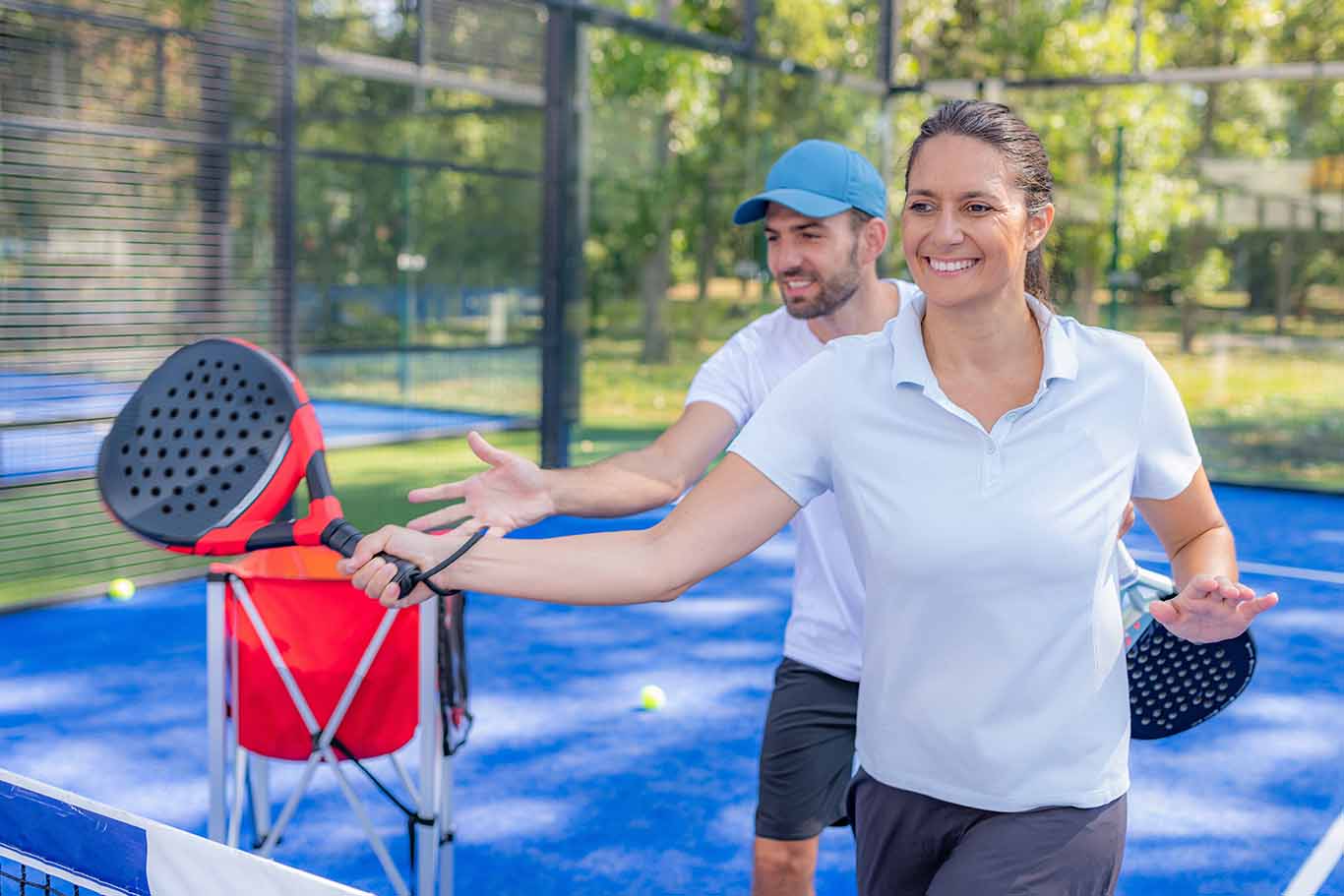
Padel (pronounced pah-dell, not paddle) is a fast-paced, fun racket sport that’s usually played in doubles on an enclosed court about a third the size of a tennis court. It combines elements of tennis and squash — think glass walls, underarm serves, and lots of rallies.
The sport originated in Mexico in the late 1960s and took Spain by storm. Today, it’s one of the fastest-growing sports in Europe, and it’s finally making serious waves here in the UK.
Rules of Padel – The Basics
If you’ve played tennis, the padel scoring system will feel familiar (0, 15, 30, 40, deuce). But the gameplay itself is refreshingly different:
- Serve: Always underarm and must bounce once behind the service line before crossing diagonally.
- Walls are in play: After the ball bounces, it can hit the glass walls and still be playable – like squash.
- Doubles only: Official padel is always played as doubles, so it’s great for sociable types.
- Scoring: Same as tennis – best of 3 sets, with 6 games per set.
A match is fast, dynamic and, most importantly, accessible — it doesn’t matter if you’ve never swung a tennis racket in your life.
Padel for beginners
New to padel? Don’t worry – it’s one of the easiest sports to pick up, even if you’ve never played tennis or squash before. Here’s why padel is ideal for beginners:
- Simple rules: The scoring is just like tennis, but the gameplay is slower and more forgiving.
- Underarm serves: No tricky overhead techniques needed.
- Shorter rackets: Easier to control than tennis rackets – perfect for quick reactions.
- Walls help, not hinder: You can use the glass walls to your advantage, which adds fun and strategy without making the game harder.
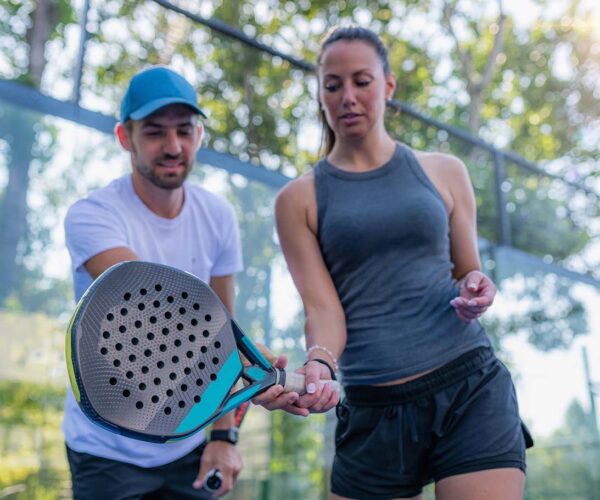
Most clubs offer introductory sessions, social mix-ins, or coaching for beginners, so you won’t feel out of place. Just bring trainers, a bottle of water, and a sense of humour – the rest is easy.
Padel court & equipment: The essentials
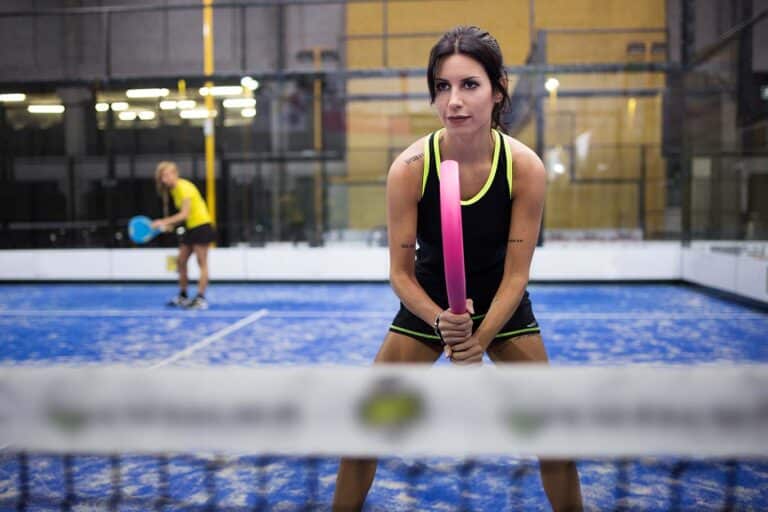
You don’t need a lot to get started – another reason why padel’s become so popular across the UK. It’s relatively low-cost, and most venues will even loan you equipment to begin with. But if you’re curious about what makes padel gear unique, here’s a quick breakdown:
The Court
- Padel courts measure approximately 10m x 20m, enclosed by glass walls and metal fencing.
- It’s a compact space compared to tennis, but it makes for fast-paced rallies and constant action.
- Unlike tennis, there’s no doubles alley – the entire width of the court is in play.
- The walls are fully in play, just like squash. After the ball bounces, it can hit the glass and still be returned, opening up loads of tactical possibilities.
Most UK padel courts are outdoor or semi-indoor, but fully indoor courts are growing in number – a blessing during our lovely British winters!
Padel racket
- Padel rackets (or “bats” as some call them) are solid and stringless, with a foam or rubber core and holes drilled through the face.
- The design offers more control and touch, with less emphasis on brute power.
- They’re shorter and lighter than tennis rackets, making them ideal for all ages and skill levels – especially if you’ve got less upper body strength or haven’t played before.
There are beginner-friendly rackets designed for better forgiveness and comfort, often available to rent or borrow at clubs.
The Ball
- Padel balls look nearly identical to tennis balls but are slightly smaller and have lower internal pressure.
- This means they bounce a little less and slow down the pace just enough to keep rallies going.
- Most venues will provide balls for social matches, though it’s worth getting your own set if you’re playing regularly.
Footwear
- Footwork is key in padel – the enclosed court means you’re constantly moving side-to-side, forward and back.
- Wear non-marking indoor court shoes or specific padel/tennis trainers with a sturdy sole and good grip.
- Avoid running shoes or anything with too much cushioning, as they may lack the lateral support needed for quick changes in direction.
Padel vs Tennis – What’s the Difference?
| Feature | Padel | Tennis |
| Court size | Smaller, enclosed | Larger, open |
| Racket | Solid, no strings | Strung with strings |
| Serve | Underarm | Overarm |
| Walls in play? | Yes | No |
| Solo play? | Doubles only | Singles and doubles |
In short: padel is easier to pick up, more forgiving, and very social — perfect for a casual weekend match or a post-work sweat.
Padel vs Pickleball – Not the same thing!
Both sports are often confused due to similar-sized courts and underarm serving, but:
- Pickleball uses a wiffle ball and wooden paddles and is mostly played in North America.
- Padel has a closer relationship to tennis, with glass walls and more dynamic movement.
If pickleball is table tennis on a big scale, padel is tennis in a cage with bounce.
Why is padel growing in the UK?

The UK is catching up with Europe in padel fever. Several factors are fuelling its rise:
- The LTA (Lawn Tennis Association) officially backs padel and now governs it in Britain.
- Since the pandemic, more people have been looking for accessible, outdoor-friendly sports.
- New padel courts are popping up rapidly across the country, from gyms and sports centres to private clubs.
According to the LTA, there are now 823 padel courts in the UK, across 300 venues with plans in the works to develop additional 80 courts across 42 venues, so numbers a growing fast.
Where can you play padel in the UK?
More places than ever! Here’s a quick look at regional hotspots:
England
- Various locations: Padel4All
- London: Home to premium clubs like Will to Win, and Rocks Lane.
- Manchester: Rapidly expanding, with indoor centres like Club de Padel
Scotland
- Growing slowly but steadily – clubs in Glasgow and Edinburgh now offer quality indoor courts.
Wales & Northern Ireland
- Fewer options at present but new courts are planned. Check with the LTA’s court finder tool for the latest.
Tip: Use the LTA Padel Court Finder to find a court near you.
How to get started with padel
Here’s what you’ll need to do:
- Book a court – many gyms and leisure centres have online booking systems.
- Rent or buy gear – most venues offer racket hire if you’re just trying it out.
- Join a beginner session – many clubs run social nights or intro lessons.
- Grab some mates – or find other players online or via club WhatsApp groups.
You don’t need to be super fit or have played racket sports before. Just show up and get involved.
Fancy a bit of competition?
Once you’re comfortable, you can:
- Enter local social leagues or round robins
- Join LTA-sanctioned tournaments
- Follow the British Padel Tour or even spectate international events when they come to the UK
Padel is a sport that ticks all the boxes – social, active, beginner-friendly, and just a lot of fun. Whether you’re looking to stay fit, make new mates, or just try something different, padel could be your new go-to.
So, what are you waiting for? Book a court, grab a racket, and give it a bash. You might just get hooked.
Specialist sports insurance with SportsCover Direct
If you have an accident whilst taking part in padel tennis, you want to know that you are protected.
At SportsCover Direct our Sports Accident Insurance policy offers financial support when you are in need, from personal accident and legal expenses to income protection for those who need it, select the sports you need when you request a quote.
Whilst our Sports Accident insurance is valid worldwide, it does not include cover for medical treatment abroad or repatriation and so is not a substitute for travel insurance. If you are participating in a sport abroad, our Sports Travel Insurance will likely to be better suited. In addition to the medical benefits, it also provides cover for trip cancellations, trip delays, sports equipment and more.
Find out more about our sports policies when you get a quote online.
This blog has been created as general information and should not be taken as advice. Make sure you have the correct level of insurance for your requirements and always review policy documentation.