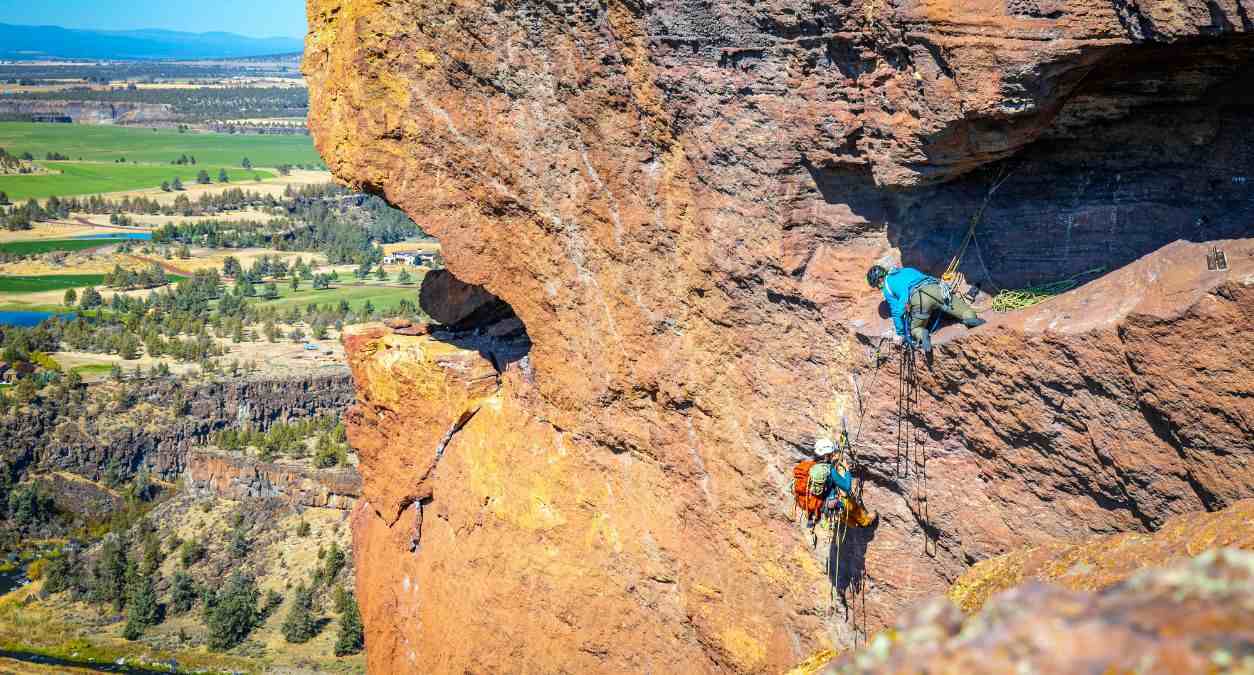


There’s something uniquely exhilarating about taking your movement training onto real rock, the constant problem‑solving, the way your body adapts to each hold, and the quiet test of strength, balance, and control that outdoor climbing demands.
Every route challenges you differently, and what you wear can directly affect how freely you move and how well you perform. Whether you’re heading outside for the first time or chasing a route that pushes your limits, choosing the right clothing helps you stay focused on the climb, not the discomfort.
Clothing isn’t just about comfort. It affects how freely you move, how well you regulate your temperature, and ultimately how safe you are.
Outdoors, you’re no longer in a controlled environment. Conditions shift, exposure increases, and small decisions, like choosing the wrong layer, can have a much bigger impact. Getting your clothing right allows you to focus on the climb itself, rather than distractions.
The basics: what to wear rock climbing
If you’re just getting started with outdoor climbing, it’s reassuring to know you don’t need highly technical or expensive clothing straight away. What matters most is choosing pieces that support movement and manage moisture effectively.
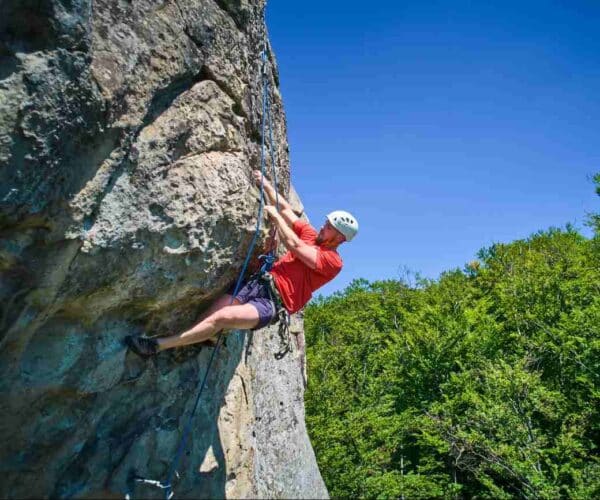
A good starting point is a breathable, moisture-wicking top paired with flexible trousers or shorts that allow for high steps, bridging, and awkward positions. Cotton is best avoided because it holds onto sweat, leaving you feeling damp and cold when the wind picks up or you stop moving. Synthetic or merino fabrics are far better at regulating temperature.
Climbing shoes are the one item where fit really matters. They should feel snug to give you precision on small footholds, but not so tight that they distract you from the climb. Alongside this, a chalk bag helps maintain grip, especially on warmer days or longer routes.
At this stage, the guiding principle is simple: wear clothing that disappears in the background. If you’re not thinking about what you’re wearing while climbing, you’ve got it right.
Layering: the secret to comfortable climbing
One of the biggest differences between indoor and outdoor climbing is how often your body temperature changes. You might feel warm and active while climbing, then suddenly cold while belaying or resting.
This is where layering becomes essential. Rather than relying on one thick item, a layering system allows you to adjust throughout the day. A base layer sits close to your skin and helps manage sweat. A mid-layer adds warmth when needed, and an outer layer protects you from wind or rain.
What makes layering so effective is flexibility. You can add or remove pieces quickly as conditions change, rather than being stuck too hot or too cold. This becomes particularly important on longer days or in exposed locations, where weather can shift without much warning.
Over time, you’ll start to understand your own comfort levels—some climbers run warm, others feel the cold more quickly—but layering gives you the control to adapt.
Gearing up for different climbing conditions
The environment you’re climbing in has a huge influence on what you should wear. Even within the same country, conditions can vary dramatically depending on location, altitude, and exposure.
In hot weather, the focus shifts to staying cool and protected from the sun. Lightweight, breathable fabrics help regulate temperature, while covering up with loose, long sleeves can actually protect you from sunburn and reduce overheating. Hydration becomes just as important as clothing in these conditions.
When the weather turns wet or windy, priorities change quickly. A lightweight waterproof jacket can make the difference between an enjoyable day and one cut short. Choosing clothing that dries quickly is also key, as damp fabric can rapidly cool your body, especially when you stop moving.
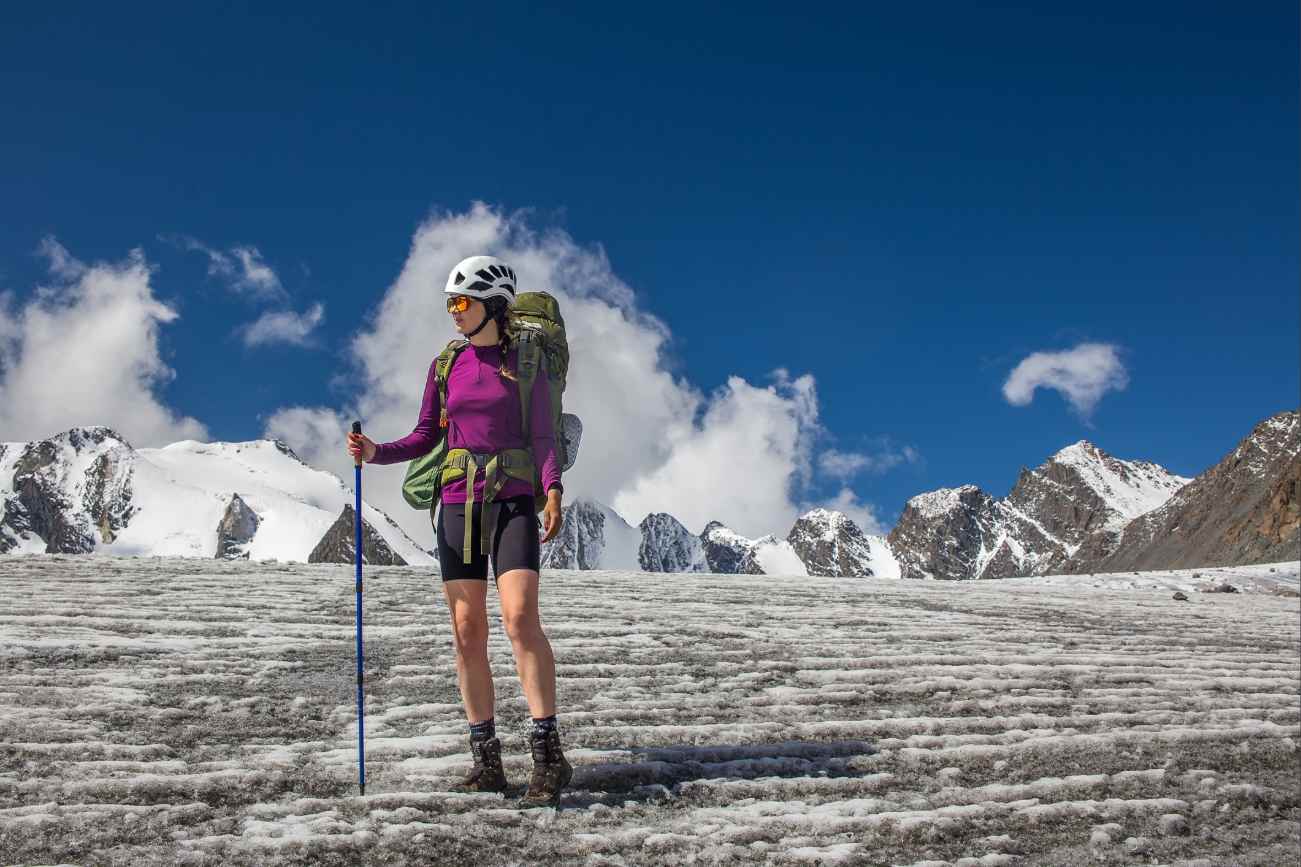
Cold or alpine climbing introduces a different set of challenges. Insulation becomes essential, but so does maintaining dexterity. You need to stay warm without losing the ability to handle ropes and gear. Thoughtful layering, combined with gloves that still allow movement, helps strike that balance.
Coastal and sea cliff climbing brings its own character. Wind exposure is often stronger, and salt in the air can affect both comfort and equipment. Conditions can feel harsher than expected, even on otherwise mild days, so having protective layers on hand is important.
Learning to dress for conditions is something that develops with experience, but thinking ahead and preparing for variability will always put you in a stronger position.
Advanced gear for more serious climbs
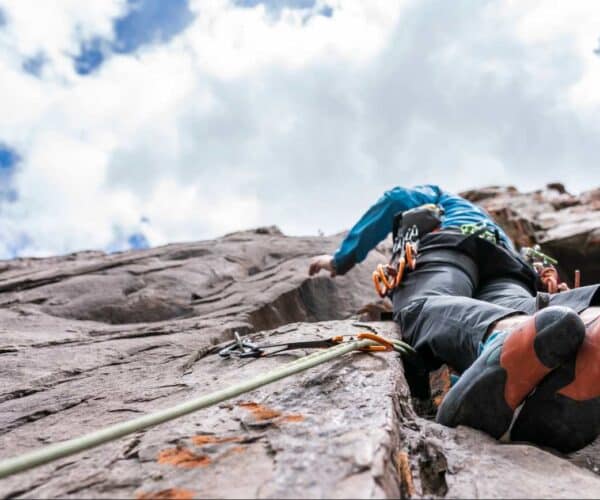
As you gain experience and begin exploring more challenging routes or environments, your clothing and accessories naturally evolve.
A helmet, for example, becomes increasingly important in areas where there is a risk of loose rock. While not strictly clothing, it’s a key part of personal protection that many climbers adopt early on outdoors.
Approach shoes are another valuable addition, especially when access to climbs involves uneven or steep terrain. They provide more support and grip than regular trainers, helping conserve energy before you even start climbing.
Other items, like gloves for belaying or crack climbing, sunglasses for bright conditions, or gaiters for alpine routes, become relevant depending on where and how you climb. These additions aren’t always necessary, but they can significantly improve comfort and safety in the right situations.
The key is not to overcomplicate things too early, but to gradually build your kit based on the type of climbing you enjoy.
Preparing for a climbing trip
Part of the appeal of outdoor climbing is the opportunity to explore new places. Whether it’s a weekend at a local crag or a trip abroad, preparation plays a big role in how smoothly things go.
Checking the weather is an obvious first step, but it’s also worth looking into the specific microclimate of your climbing area. Some crags stay shaded and cool, while others are exposed to sun or wind throughout the day. Understanding this helps you pack more effectively.
It’s also important to consider the style of climbing you’ll be doing. A short sport climbing session requires very different preparation compared to a full day of trad climbing or an alpine route. The more committing the climb, the more important it becomes to think ahead.
Packing with a margin of safety is a good habit to develop. Bringing an extra layer or spare essentials might seem unnecessary at first, but these small additions can make a big difference if plans change or conditions worsen.
Preparation isn’t about expecting problems—it’s about giving yourself the confidence to handle them if they arise.
Consequences of wearing the wrong gear
It’s easy to underestimate how much clothing can affect your experience until something goes wrong.
Wearing the wrong gear can lead to discomfort at best, but in more serious situations, it can compromise safety. In cold or wet conditions, inadequate clothing increases the risk of hypothermia. In hot weather, poor choices can contribute to overheating and dehydration.
Even smaller issues, like restricted movement from tight or unsuitable clothing, can impact your ability to climb efficiently. When movement feels harder, fatigue sets in more quickly, and your margin for error becomes smaller.
There’s also the mental side to consider. Being distracted by discomfort—whether it’s cold hands, wet fabric, or overheating—takes your focus away from the climb itself.
Outdoors, these factors are amplified. Unlike indoor climbing, you can’t simply step away easily or adjust the environment. That’s why getting your clothing right is such an important part of preparation.
Other considerations beyond clothing
While clothing plays a central role, it’s only one part of a bigger picture.
Spending extended time outdoors means thinking about sun exposure, hydration, and energy levels. Even on cooler days, UV exposure can be significant, particularly on exposed rock faces. Simple measures like sunscreen and eye protection can make a big difference over time.
Approach routes are another factor that’s often overlooked. Reaching a climb can involve walking over uneven ground, scrambling, or navigating steep paths. Being prepared for this part of the day is just as important as the climb itself.
There’s also the question of safety planning. Outdoor climbing often takes place in more remote areas, where help may not be immediately available. Thinking about communication, access, and basic emergency preparedness adds an extra layer of security.
Climbing outdoors is as much about awareness and decision-making as it is about physical ability.
Climbing while travelling
Travelling for climbing opens up a whole new world of possibilities—different rock types, landscapes, and styles of climbing. It’s often where some of the most memorable experiences happen.
At the same time, it introduces additional considerations. Transporting gear can be challenging, particularly with airline restrictions on weight and baggage. Deciding what to bring versus what to rent locally becomes part of the planning process.
Climbing in unfamiliar locations also means adjusting to new conditions. Weather patterns, rock types, and local access can all differ from what you’re used to. Taking time to research and prepare helps avoid surprises.
Access to rescue services and medical care can vary significantly between locations as well. While it’s not something most climbers dwell on, it’s worth being aware of when heading abroad.
Why insurance matters for climbers
Even with the right clothing, careful planning, and experience, climbing always carries an element of unpredictability. That’s part of what makes it exciting, but it’s also why preparation goes beyond just gear.
In outdoor environments, especially in more remote or international locations, incidents can become complex quickly. Rescue operations, medical treatment, or even recovering lost equipment can involve significant cost and logistics.
Climbing-specific travel insurance is designed to support these situations. It can cover emergency rescue and evacuation, medical expenses abroad, and protection for your equipment and trip.
It’s not about expecting something to go wrong. It’s about giving yourself the freedom to fully enjoy the experience, knowing you’re prepared for the unexpected.
Before heading out on your next trip, it’s worth taking a moment to make sure you’re properly covered so you can focus on the climb itself.
Final checklist: gear for climbing outdoors
When it comes to clothing, simplicity and adaptability are key. A solid foundation of breathable, flexible clothing will take you a long way, especially when combined with a thoughtful layering system.
As you gain experience, you can refine your choices based on the environments you climb in most often. Adding pieces for specific conditions—whether that’s insulation for cold weather or protective layers for wind and rain—helps you stay comfortable and confident.
Ultimately, the goal is to remove distractions. When your clothing works with you, rather than against you, you’re free to focus on movement, problem-solving, and enjoying the experience.
For more information read our full rock-climbing equipment list.
Rock Climbing Insurance can protect your next climbing adventure
Get an instant quote for your climbing requirements.
SportsCover Direct’s specialist Rock Climbing Insurance offers cover for up to 7,000m. You can select from three policy options, including our Travel Insurance which includes going abroad either for leisure or to compete. You’ll benefit from financial cover for medical and repatriation fees, as well as being protected in the event your trip is cancelled or impacted in some way.
There’s also our Travel Insurance Bolt-On, in case you already have a policy for going overseas that doesn’t cover rock climbing. Lastly, the Sports Accident policy gives you peace of mind if an incident occurs, including personal liability and protection for loss of earnings.
This blog has been created as general information and should not be taken as advice. Make sure you have the correct level of insurance for your requirements and always review policy documentation.