


Golf has never been short of rules and is known for its fair share of traditions.
As a golfer, you’ll likely be familiar with some of the quirks that come with playing. Some bring a sense of tradition, whilst others can leave you standing in the car park wondering why you wore a non-regulation t-shirt and didn’t check the dress code!
The reality is that there is no single golf dress code followed by every club in the UK.
Most golf clubs expect players to wear clean, appropriate golf clothing, but exactly what that means can vary significantly from one course to another. At some clubs, modern golf hoodies and relaxed clubhouse clothing are perfectly acceptable. At others, tucked-in shirts, tailored shorts and more traditional standards still apply.
So, how strict are UK golf dress codes really? And which of golf’s old clothing rules are still hanging on?
Why does golf have a dress code?
Dress codes are closely tied to golf’s long history as a club-based sport.
For many golf clubs, a dress code is still considered part of maintaining certain standards around the course and clubhouse. For others, those traditional expectations have become less important as they look to make golf feel more relaxed and accessible.
Thankfully, nobody expects the extremes of the past. But a few echoes of those older traditions can still be found in golf club rules today.
What is the typical golf dress code in the UK?
Although every club can set its own rules, there are some fairly safe choices when deciding what to wear to a golf course.
| Clothing | Acceptable or not? | What to check |
| Golf polo shirt | Yes | Some clubs may still expect shirts to be tucked in |
| Golf trousers | Yes | Jeans, cargo trousers or tracksuit-style bottoms may be restricted |
| Tailored golf shorts | Usually | Some clubs still have rules around style or sock length |
| Golf skirt or skort | Usually | Certain clubs may have guidance around length |
| Golf dress | Increasingly | Check that the club permits modern golf-specific styles |
| Golf hoodie | Increasingly | More relaxed clubs may allow them, while traditional venues may not |
| Collarless golf shirt | Sometimes | Usually needs to be clearly designed as golf wear |
| Jeans | Usually not on the course | Smart denim may be accepted in some clubhouse areas |
| Trainers | Can depend
|
Golf shoes or suitable golf-specific footwear may be required |
| Golf leggings | Can depend
|
Golf-specific styles may be accepted where ordinary gym leggings are not |
| Baseball cap | Usually outdoors | Some clubs specify peak-forward and hats removed indoors |
| Football or rugby shirt | Usually no | Sports team shirts are commonly prohibited |
| Cargo shorts | Often no | Still restricted at many traditional clubs |
The safest approach if you’re playing somewhere unfamiliar is simple: check the club’s website before travelling.
How much do golf dress codes vary between clubs?

More than you might think.
The changing face of golf means UK clubs now sit across a fairly broad spectrum.
At the relaxed end, some venues have reduced or removed traditional dress codes altogether. The emphasis is simply on wearing something sensible and appropriate for playing golf.
Many clubs sit somewhere in the middle. They expect recognised golf clothing but aren’t particularly concerned about whether your socks reach a certain height or your shirt happens to be untucked.
Then there are more traditional clubs where the rules remain noticeably more detailed.
That might mean shirts are expected to be tucked in, shorts need to be tailored rather than cargo-style and particular rules apply around socks, hats or clubhouse clothing.
Dress codes can also differ within the same venue. Something considered perfectly acceptable on the course might not be suitable for a dining room or formal clubhouse event.
So even regular golfers can occasionally be caught out when visiting somewhere new.
The useful thing to remember is that golf dress codes aren’t necessarily about dressing formally anymore. Increasingly, they’re about whether the clothing is regarded as suitable for golf.
Are golf dress codes different for men and women?
Often, yes.
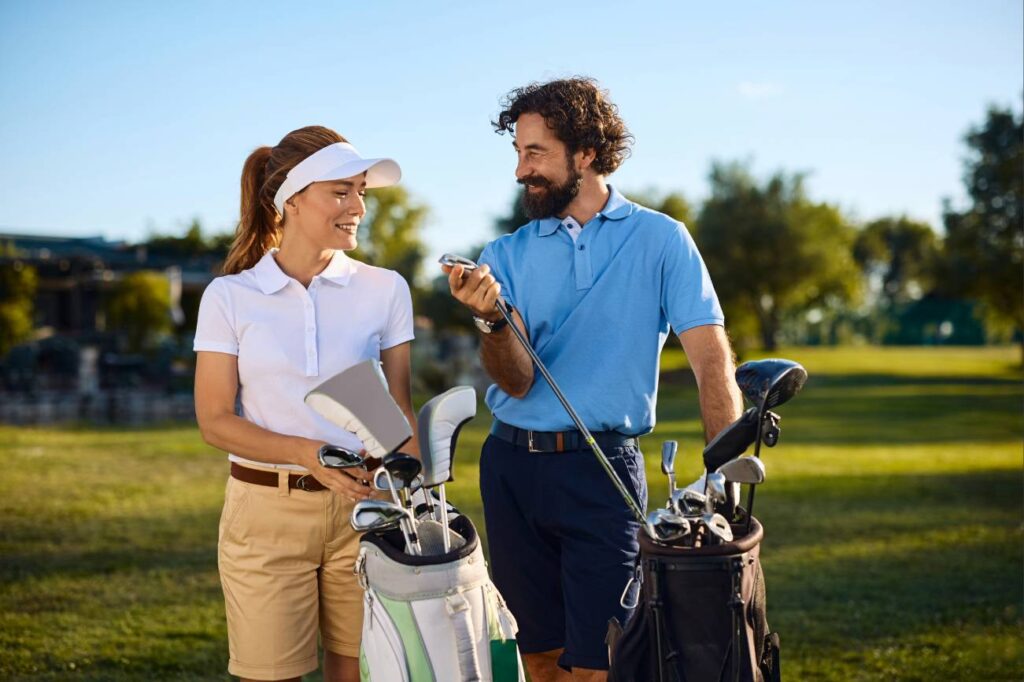
Traditional golf dress codes tended to divide clothing quite neatly into “men’s” and “ladies'” sections, and some clubs still use that approach.
For men, the rules are usually relatively simple: appropriate golf shirt, trousers or tailored shorts, suitable shoes and, occasionally, a reminder to keep that shirt tucked in.
Women’s dress codes can be much more detailed simply because there are more styles of golf wear to account for.
Golf’s strangest dress-code traditions
This is where golf really brings some unique elements.
The long-sock rule
For years, one of golf’s most recognisable dress-code rules involved men wearing long socks with shorts.
The requirement has disappeared from many clubs, with ankle and trainer-style socks now widely accepted. However, variations of the traditional rule can still be found.
It remains one of those wonderfully golf-specific questions that players of most other sports rarely have to consider.
The backwards-cap problem
Wearing a baseball cap backwards might be entirely normal away from the course, but some golf clubs specifically prohibit it.
The accepted golfing position remains peak forwards.
Trousers tucked into socks
Another surprisingly common prohibition.
Cargo shorts
Cargo shorts have spent years on the wrong side of golf dress codes.
Even clubs that have relaxed their rules considerably can still draw the line at large external pockets.
Modern golf shorts tend to resemble smart casual clothing anyway, so if you’re unsure, tailored golf shorts remain the least controversial option.
Hats indoors
Removing hats inside the clubhouse is another tradition that survives at many clubs.
It has little to do with playing golf itself and much more to do with the wider etiquette associated with clubhouses.
You may therefore be perfectly dressed for 18 holes but still need to make one small adjustment before ordering your post-round drink.
Do you really need to wear a collared shirt to play golf?
Not necessarily.
The classic polo is still the easiest option if you want to avoid thinking about it.
But modern golf wear has changed significantly.
Collarless shirts are now common in professional golf. Specialist golf hoodies are mainstream. Quarter-zips, technical pullovers and athletic tops are standard parts of many golfers’ wardrobes.
The problem is that professional golf fashion and golf club policy do not always update at the same speed.
So, while your shirt may have been designed specifically for golf, endorsed by a tour professional, a traditional club may still prefer you to wear a collar.
Can you wear jeans on a golf course?
Usually, the safest answer is no.
Jeans remain one of the most commonly restricted items on UK golf courses.
In the clubhouse, things are much less clear-cut.
Some clubs now happily allow denim in bars and informal areas, while others retain a more traditional smart-casual standard.
What happens if you break a golf club dress code?
Usually, nothing particularly dramatic.
However, clubs are entitled to enforce their own rules.
If your clothing doesn’t meet the required standard, you could be asked to change before playing. In some situations, you may not be permitted onto the course or into a particular clubhouse area until you do.
For visitors, the biggest consequence is usually inconvenience.
There is also the possibility of needing to buy replacement clothing from the pro shop.
An emergency bought polo may suddenly become one of the most expensive items in your wardrobe.
So, how strict are UK golf dress codes?
By and large golfing dress codes have become much more informal across the board.
However, we’ve established that there are multiple different interpretations from golf club to golf club.
Some clubs have embraced hoodies, modern golf wear and a much more relaxed approach. Others still value traditional standards and retain detailed rules around shirts, shorts, socks and clubhouse clothing.
Most golfers will have no trouble when sticking to recognised golf clothing.
When visiting unfamiliar clubs, it’s always worth checking the dress code, especially with more traditional, older, established clubs to avoid embarrassment or an expensive trip to the pro shop.

Protecting your golf clothing and equipment
Golf clothing has become increasingly technical – and increasingly valuable.
Add a few polos, waterproofs, shoes and specialist layers to your clubs, bag and accessories and the value of your golf kit can increase quickly.
Depending on your policy and the circumstances, specialist golf insurance can provide cover for golf equipment and associated clothing if it is lost, stolen or damaged.
Discover what golf insurance can cover from SportsCover Direct.
From golf equipment, liability, property damage, hole-in-one traditions and more.
This blog has been created as general information and should not be taken as advice. Make sure you have the correct level of insurance for your requirements and always review policy documentation.