


Choosing the right golf clubs is one of the biggest factors influencing performance, enjoyment, and consistency on the course. Whether you’re a regular club golfer, an occasional weekend player, or travelling to take on links courses across the UK (and beyond), a solid understanding of what each club is designed to do can make a real difference to your game.
The good news is you don’t necessarily need a “full bag” to play well. Many golfers won’t use all 14 clubs in a typical round, and modern designs have made it easier to cover more situations with fewer, more versatile options. Hybrids, higher-lofted fairway woods, and forgiving iron sets can act as reliable all-rounders, especially helpful for newer players or anyone who prefers simplicity.
It’s also worth knowing that the official equipment rules go into huge detail on how clubs must conform, right down to things like head shapes, adjustability, and face markings. In practice, most golfers don’t need to overthink this: if you’re buying standard, mainstream clubs from reputable brands (and not modifying them), you’ll almost always be fine for everyday golf and most club competitions.
In this guide, we’ll cover the essentials without drowning in jargon: the key rules around golf clubs, the main types and what they’re used for, how to choose clubs for different conditions and playing styles, and why a proper club fitting can be a bigger advantage than many golfers realise.
Types of golf clubs and what they’re used for
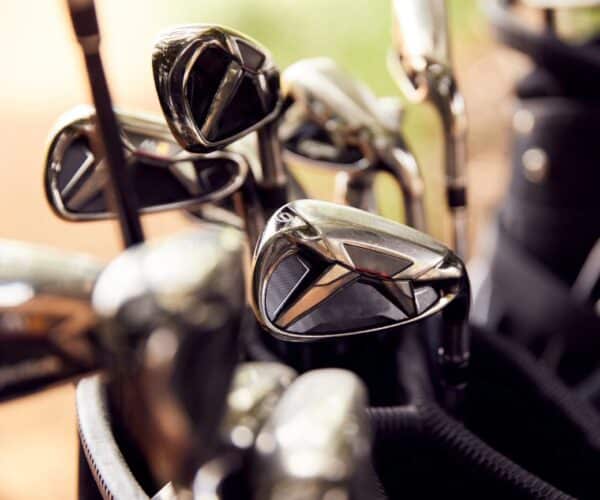
Understanding what each type of golf club is designed to do helps golfers make better decisions both when building a set and when choosing a club on the course. While modern equipment offers more options than ever, every club still has a clear purpose.
Woods: Built for Distance
Woods are designed to hit the ball the furthest and typically feature the largest clubheads. Their size and shape help generate speed and launch, making them ideal for longer shots.
Driver
The driver has the lowest loft of any club and is built purely for maximum distance. It’s normally used from the tee, particularly on longer par 4s and par 5s, where length matters more than precision.
Fairway Woods
Fairway woods such as 3-woods, 5-woods, and 7-woods are more versatile. They can be used from the tee or the fairway and are especially useful for long approaches, tight driving holes, or when accuracy off the tee is more important than distance. Their rounded shape helps lift the ball easily, although uneven lies can still be challenging.
Hybrids: Versatility and Forgiveness
Hybrids blend features of both woods and irons and are now a common sight in many golfers’ bags. They are designed to replace longer irons and are generally easier to hit.
Hybrids perform particularly well from rough, poor lies, and firm or windy conditions, all common challenges on UK courses. Many amateur golfers find hybrids far more consistent than traditional long irons, especially on links or heathland layouts.
Irons: Control, Accuracy, and Shot Shaping
Irons form the core of most golf sets and are primarily used for approach shots into the green.
Numbered from around 3 or 4 through to 9, irons offer a balance of distance and accuracy. Lower-numbered irons generate more distance but demand solid ball striking, while higher-numbered irons provide better control and stopping power. Their smaller clubheads and flatter faces make them ideal for shaping shots and managing distance.
Wedges: Scoring Clubs
Wedges are critical for short-game performance and can dramatically lower scores.
Common types include:
- Pitching wedge
- Gap (or approach) wedge
- Sand wedge
- Lob wedge
Each wedge has different loft and bounce combinations, affecting how the club interacts with turf and sand. UK golfers, especially those playing links courses, often benefit from carefully chosen bounce options.
Putters: Precision on the Green
Putters are used exclusively on the green and vary widely in design and feel.
Blade putters offer a traditional look and more feedback, while mallet putters provide greater forgiveness and stability. Differences in balance (face-balanced vs toe-hang) suit different putting strokes, making putter choice highly personal. Comfort and confidence matter more here than brand or appearance.
Golf club rules and regulations
How many golf clubs are you allowed to carry?
Under The R&A rules, which govern golf in the UK and most of the world, players are allowed to carry a maximum of 14 clubs during a round. This applies to:
- Casual rounds
- Club competitions
- Open and professional tournaments
Carrying more than 14 clubs results in penalties, even if the extra club isn’t used. Many golfers are surprised to learn that simply having the extra club in the bag is enough to incur a penalty.
Conforming golf clubs
Clubs used in competition must meet official equipment standards. These rules govern factors such as:
- Clubhead size and shape
- Groove design
- Driver face flexibility
- Maximum club length
Most modern clubs sold by major manufacturers are conforming, but golfers buying older or second-hand equipment should take care, particularly if they play competitive golf.
While the official equipment rules are extremely detailed, most golfers only need to remember a few key principles:
- Clubs must look and behave like traditional golf clubs
- Adjustable clubs must be set before the round and left unchanged
- Clubfaces and grooves must not be altered to increase spin
- Putters are allowed more design freedom, but still have limits
For everyday golfers, using recognised brands and avoiding modifications is usually enough to stay within the rules.
Materials and design
Modern golf clubs are made from advanced materials including titanium, steel, and composites, paired with steel or graphite shafts. Adjustable drivers and fairway woods are permitted, provided they meet strict requirements and are not adjusted during a round.
Groove regulations, particularly for wedges, have become stricter over time. While most amateur golfers won’t need to worry, competitive players should ensure their wedges conform to current standards.
What golf clubs do you actually need?

Choosing clubs based on skill level
Beginners benefit from forgiving clubs with larger sweet spots and fewer specialised wedges. As players improve, they often focus more on distance gaps and shot versatility. Advanced golfers fine-tune lofts, wedge setups, and ball flight to match their playing style.
Course type and terrain considerations
UK golfers regularly encounter very different course styles:
- Links courses favour lower ball flights, hybrids, and versatile wedges.
- Parkland courses reward higher-launch irons and stopping power.
- Heathland courses require adaptability due to mixed conditions.
Your set should reflect where you play most often.
Weather and playing conditions
Weather plays a huge role in club choice:
- Windy conditions favour lower-lofted clubs and punch shots
- Wet turf benefits from higher bounce wedges
- Cold weather reduces distance, often requiring more club
Regular UK golfers often adjust club selection more than players in consistent climates.
Golf clubs for travelling golfers
Building a travel-friendly set
Travelling golfers may not always carry a full 14-club setup. Versatility becomes more important than specialisation.
A smart travel bag often includes:
- Adjustable driver
- One or two fairway woods or hybrids
- Core irons
- Two versatile wedges
- Reliable putter
Read more on golf travel bags.
Playing golf abroad vs the UK
Golfers travelling abroad may encounter:
- Different grass types
- Firmer or softer fairways
- Faster or slower greens
These differences can influence wedge selection, ball choice, and even shaft preferences.
Why get a golf club fitting
A golf fitting can be a smart choice because it customises your clubs to match your natural swing and physical attributes, leading to improved accuracy, greater consistency, increased comfort, reduced risk of injury, and more confidence often resulting in better performance and lower scores for golfers of all skill levels.
A professional fitting will assess:
- Club length
- Lie angle
- Shaft flex and weight
- Grip size
- Launch and spin characteristics
This ensures clubs match your swing rather than forcing you to adapt to the equipment.
Modern golf club technology
Modern clubs often feature adjustable weights, loft settings, advanced face materials, and refined shaft designs. These technologies can help improve performance, but they work best when paired with proper fitting and realistic expectations.
Technology alone won’t fix swing flaws, but the right setup can make good swings more consistent.
Building the right golf club set
The best golf clubs aren’t necessarily the most expensive or the newest, they’re the ones that suit your game, your courses, and your conditions. UK golfers and travelling players benefit most from versatility, thoughtful selection, and well-fitted equipment.
Reassessing your clubs from time to time can be just as valuable as practising your swing.
Protect your golf clubs with specialist golf insurance
Building a golf club set often involves a significant investment of both time and money. With premium clubs being an attractive target, specialist golf insurance has become increasingly important, helping protect you from a substantial financial loss if your equipment is stolen.
SportsCover Direct’s specialist golf insurance offers cover for personal liability in case you accidentally injure someone or damage property on the course. It also includes up to £250 towards the traditional clubhouse round, if you score a hole-in-one, during a competition.
Your equipment is protected too, with up to £7,500 cover for clubs, bags, and single seater buggies. We’ll even replace damaged clubs with brand new ones, with no single item limits. And for added reassurance, our personal accident cover provides a lump sum payout in the event of serious injury or accidental death while playing.
Get a quote online to get covered in minutes.
Sources:
https://www.randa.org/en/roe/the-rules-of-equipment/part-2-conformance-of-clubs
This blog has been created as general information and should not be taken as advice. Make sure you have the correct level of insurance for your requirements and always review policy documentation.