
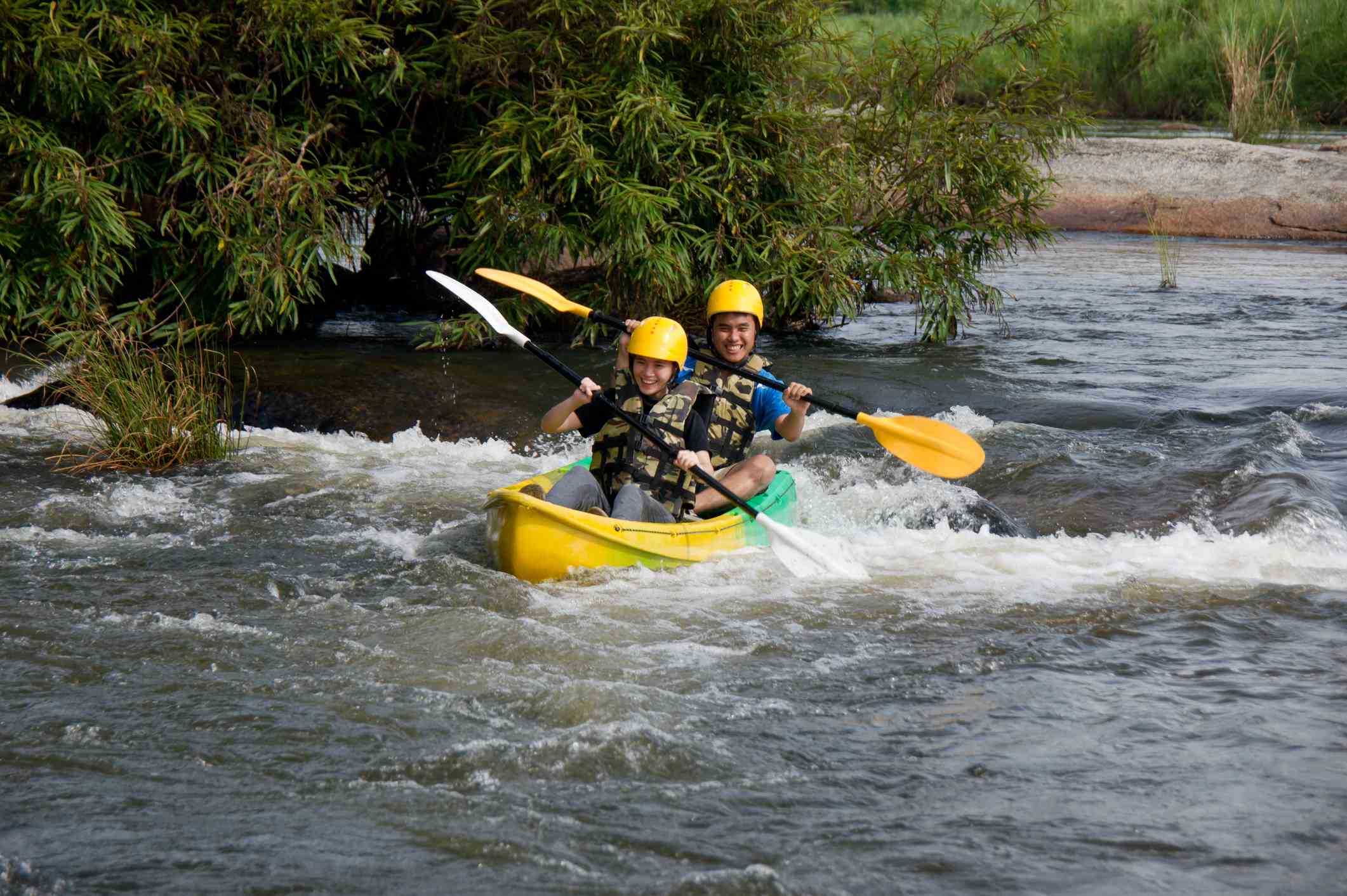
Kayaking is an exhilarating sport for participants of all levels, helping you get fit, fulfil your sense of adventure and enjoy the natural world around you.
However, it isn’t the simplest sport in the world to take part in. Kayaking requires substantial amounts of equipment, not only so that you can propel and steer your boat correctly, but also so that you can keep yourself as dry and as safe as possible. No kayaking trip should therefore be undertaken without having everything you need at hand and in good condition.
In this guide, we’ll take a look at the ten pieces of kayaking gear that you should never be without, whether in the UK or abroad.
Kayaking gear essentials for every trip
The equipment you need for kayaking will vary slightly, depending on your level of experience and the type of water you’ll be navigating. But in almost every case, these ten items are indispensable:
Kayak
This sounds like it goes without saying, but it’s vital to make sure you have the right kayak. They can come in various lengths and specifications, with shorter boats generally used by beginners. You may also want to consider whether you use a sit-on-top kayak or one with a more enclosed cockpit. Whichever you prefer, you should ensure it’s in good condition before every trip onto the water.
Paddle
If you’re a beginner, you may not be aware that a kayak paddle is different from a canoe paddle: the difference is that a kayak paddle has blades on both ends. Kayak paddles are normally very long, so that you can easily get either end into the water, and taller kayakers will need longer paddles. As well as getting the right length of paddle for your needs, you should also consider a spare if you’re going on a remote adventure.
Lifejacket or buoyancy aid
Even the most experienced kayakers get into trouble sometimes – and that’s why safety gear is so important, whatever your level of ability. Most kayaking activities take place in relatively deep water, and there’s also the risk of currents in rivers and seas if you fall overboard. A lifejacket or similar buoyancy aid is therefore vital for keeping you afloat, and making you more visible to emergency services.
Helmet
There are several risks of head injury when kayaking. Probably the biggest one is rocks if you come out of your boat or capsize, but there’s also the possibility of getting hit by somebody else’s paddle (or even your own!). That’s why helmets are critical for most kayaking trips, apart from possibly sea kayaking where there are fewer things around to hit your head on.
Wet shoes
You might not think of footwear for kayaking, but it’s surprisingly useful. Flip-flops won’t work because they don’t give your feet any support. Trainers do, but they soak up water and get very wet and heavy. Instead, you should make the small investment into a pair of wet shoes. These are generally topped with neoprene and come with soles made of rubber, so that your feet stay dry and you can grip whichever surface you’re walking on.
Wet suit or water-repellent top
You might not need water-resistant clothing if you’re kayaking on a hot, sunny day and you’re likely to dry out quickly from any splash. However, if the conditions are cooler, windier or wetter, a wet suit or similar clothing can help you stay dry and keep your core temperature up. This can also potentially be a life-saving piece of equipment if you happen to fall into cold water.
Dry bag
If you’re travelling with your possessions, such as your phone, your wallet/purse, your spare clothes or your travel documents, then it’s essential that they’re kept dry. A dry bag is a completely watertight way of protecting the contents, even if you were to capsize. They’re handy for making sure that any incidents that occur on the water don’t affect anything you need to do off the water.
First aid kit
If you’re in a remote environment and an accident happens, it might take a long time for emergency medical help to reach you. A first aid kit won’t be able to solve every medical problem that arises, but it can certainly help with minor injuries. You should ensure that the kit contains bandages, disinfectant, tweezers, rubber gloves and plasters at a bare minimum.
Navigation aid
If you’re on a lake or canal, it’s relatively easy for you to keep track of where you are. But if you’re out in the countryside, things can get much tougher. A reliable means of working out where you’re going is therefore key, especially in case of an emergency. This doesn’t always mean GPS, because you may not be in an area with consistent signal – don’t overlook the benefits of a good old-fashioned paper map (as long as you keep it dry!).
Insurance
The ramifications of an accident or incident when kayaking can quickly get expensive, whether you’ve hurt yourself, damaged your equipment, or are liable for an injury to someone else. It can get even more expensive if this happens abroad, and medical bills and repatriation costs come into play. That’s why you should always take out good insurance cover, to guarantee that you’re financially protected if the unforeseen occurs.
Get kayaking insurance with SportsCover Direct
Whether your kayaking is calm and peaceful on a lake, or thrilling and adrenaline-fuelled on white water, taking out insurance to protect yourself in the case of an incident is a must. SportsCover Direct have been providing insurance to kayakers and a range of other sportspeople for more than two decades, with a range of comprehensive policy options.
Our kayaking policies include support for event cancellations, personal accident, personal liability, loss or theft of your luggage, travel disruption, medical expenses, repatriation from abroad and more. Take a closer look at our competitively priced cover and flexible payment plans here.