


France offers some of Europe’s most varied and rewarding walking. That variety is exactly what makes hiking holidays in France so appealing. It also means that choosing the right trip requires more than finding a route with good views.
A walking holiday in Provence will involve very different conditions from a high-altitude route in the Alps. A coastal itinerary may avoid altitude but still include steep, repeated climbs. Even routes with similar daily distances can feel completely different depending on elevation, heat, terrain and the availability of water.
Before booking, it is worth understanding the type of walking involved, the conditions you are likely to face and whether your itinerary matches your fitness and experience. You should also check that your travel insurance covers the activities, altitude and terrain included in your trip.
This guide explains what to know before hiking in France, from choosing the right region and assessing hiking routes to managing summer heat, walking at altitude and planning for the practical details many first-time visitors overlook.
Choosing the right type of hiking holiday
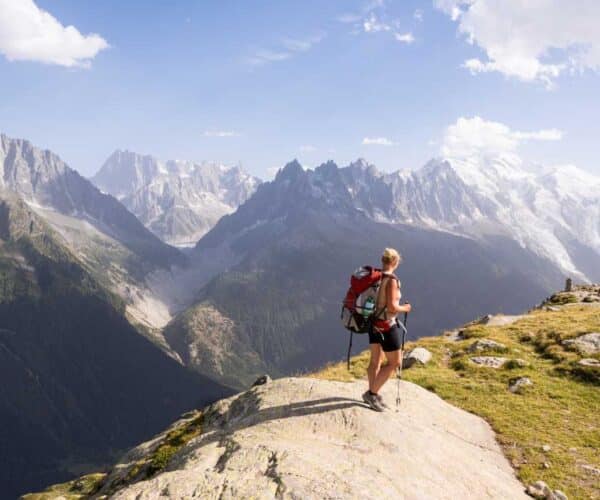
Not all hiking holidays in France are created equal. One itinerary might involve gentle day walks from a comfortable hotel, while another could mean carrying everything you need between mountain refuges, climbing high passes and spending long days on rugged trails.
Before comparing destinations, it’s worth deciding what kind of experience you’re looking for – then it’s easier to compare individual itineraries.
When comparing hiking holidays in France, these are some of the most useful details to check:
- Daily distance
- Total ascent and descent
- Expected walking time
- Maximum altitude
- Trail surface
- Exposure
- Number of consecutive walking days
- Availability of easier alternatives
- Distance between accommodation, food and water
Choosing an itinerary that matches your fitness, confidence and recovery time will usually result in a far more enjoyable holiday than simply selecting the most demanding route.
Guided Hiking
Guided hiking holidays are a strong choice if you want expert support, local knowledge and less responsibility for route-finding. A guide can help interpret changing weather, adjust the pace of the group and bring the landscape to life through knowledge of wildlife, geology and local culture.
Guided trips vary widely. Some are relaxed, hotel-based holidays with moderate day walks, while others involve high-altitude trekking, remote terrain and nights in mountain refuges. Check the daily ascent, group size, maximum altitude and expected experience level before booking.
Self-Guided Hiking
Self-guided hiking offers more independence while still taking care of much of the organisation. Accommodation, route notes, luggage transfers and sometimes local support are usually arranged in advance, leaving you free to walk at your own pace.
However, self-guided does not mean fully supported on the trail. You are still responsible for navigation, weather decisions and knowing when to shorten or abandon a route. In mountain areas, confidence using offline maps and understanding route conditions is important.
Before booking, check what support is actually included. Some operators provide detailed route information and emergency assistance, while others offer little beyond accommodation and luggage transfer. It is also worth confirming that your hiking insurance for France covers self-guided walking at the altitude and difficulty level shown in the itinerary.
Long-Distance Hiking
France is home to some of Europe’s most celebrated long-distance trails. Routes such as the GR10 across the Pyrenees, the Stevenson Trail (GR70) and sections of the Camino de Santiago offer the chance to immerse yourself in the landscape over several days or even weeks.
Daily distances are generally moderate, but walking day after day creates its own physical challenge, making fitness and recovery just as important as individual route difficulty.
For many walkers, long-distance hiking offers the most rewarding way to experience France, allowing the landscape, culture and pace of travel to unfold naturally.
Multi-Day Refuge Hiking
For a true mountain adventure, multi-day refuge hiking takes you deep into the Alps or Pyrenees, staying overnight in traditional mountain refuges rather than hotels.
Days are typically longer, with greater elevation gain and more remote terrain. Accommodation is often simple but welcoming and sharing an evening meal with fellow walkers is part of the experience.
Routes such as the Tour du Mont Blanc or sections of the Haute Route combine spectacular scenery with the satisfaction of travelling through the mountains under your own steam.
Because you’re further from roads and facilities, these trips require more preparation. It’s also worth checking that your travel insurance covers multi-day trekking, mountain rescue and the maximum altitude you’ll be walking at.
Altitude Hiking
Not every mountain walk involves significant altitude, but many of France’s most iconic routes climb above 2,000 metres.
Walking at elevation feels very different from hiking at lower levels. Climbs become more demanding, weather can change quickly and conditions often vary dramatically between valley floors and mountain passes.
If you’re new to mountain hiking, there’s no need to jump straight into high-altitude routes. Many Alpine valleys offer superb walks below 2,000 metres, allowing you to experience spectacular scenery while building confidence before tackling more demanding itineraries.
Whether you’re planning a day walk or a multi-day trek, understanding how altitude affects both your body and your insurance cover is an important part of choosing the right holiday.
Your body is working harder than you realise
Whenever you’re active in hot weather, your body is constantly trying to keep itself cool.
It increases blood flow to your skin, your heart beats faster and you sweat more to regulate your temperature. All of that requires extra energy and leads to greater fluid and salt loss.
As a result, a hike, bike ride or game of tennis that would normally feel comfortable in the UK may feel noticeably more demanding abroad.
That’s completely normal.
Rather than seeing this as a sign, you’re less fit than expected, think of it as your body adapting to a different environment.
How to find suitable hiking routes
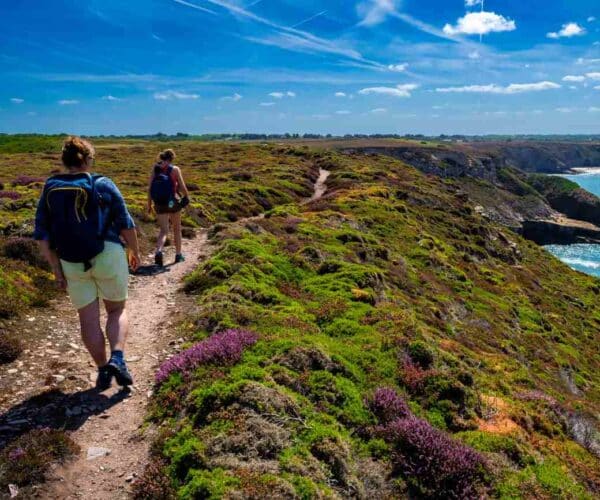
France has a large network of long-distance and local paths, including the well-known GR routes. These cover everything from national traverses to regional circuits and pilgrimage trails.
Use several sources when assessing a route. An operator’s itinerary is a good starting point, but it is also worth checking a detailed topographic map, recent route reports and local tourism or national-park information.
Navigation apps such as Komoot, Outdooractive and AllTrails can help with research. For mountain terrain, detailed topographic information is particularly valuable because it shows contour lines, steepness and surrounding escape options more clearly than a basic route summary.
Many recognised trails are waymarked, but signs should support your navigation rather than replace it. Markers can fade, vegetation can hide them and several paths may meet at the same point. Download an offline version of your route before setting out.
Hiking safety tips for France
Good preparation does not make a holiday less adventurous. It gives you more freedom to enjoy the route with confidence.
In the mountains
For effective mountain hiking safety, check a mountain-specific forecast on the morning of your walk. Afternoon thunderstorms can develop quickly, particularly in summer.
Start early on long or exposed routes, agree on a turnaround time and plan around the slowest member of the group. Check whether snow remains on high passes and avoid steep snow unless you have the appropriate skills and equipment.
On coastal trails
Stay back from cliff edges, especially after rain or in strong wind. Erosion can make the ground unstable beyond the visible path.
Check tide times where routes use beaches, estuaries or rocky shoreline. Wet rock, steps and seaweed can be extremely slippery.
Inland
In rural areas, pay attention to temporary signs, local restrictions and organised hunting activity. Respect farmland and livestock, close gates and follow any access instructions.
Walkers may also encounter livestock protection dogs in mountain or pastoral regions. Keep your distance from herds, move calmly and avoid running or shouting.
In every environment
Tell someone where you are going, carry offline route information and keep enough daylight in reserve for delays.
France uses the European emergency number 112. Mobile coverage, however, may be unreliable in valleys, gorges and remote countryside.
Practical details many first-time visitors miss
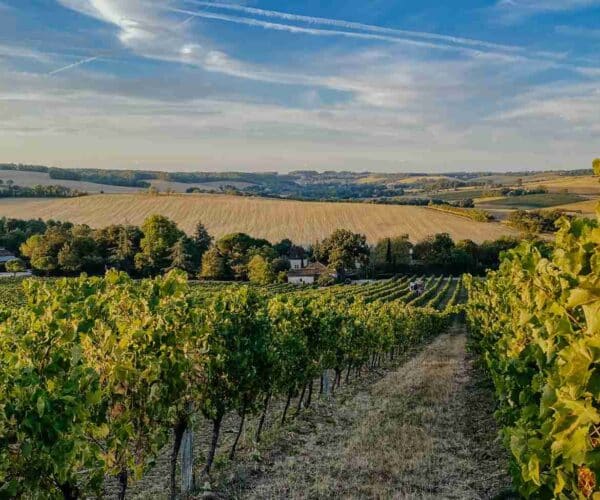
The success of a walking holiday often depends on details that are easy to overlook when comparing scenery and accommodation.
Transport to the trail
Some routes begin close to railway stations or villages. Others require a taxi, private transfer or a seasonal bus.
Confirm how you will reach the starting point and, just as importantly, how you will leave the end of the route.
Mountain refuges
Mountain refuges vary considerably. Some offer hot meals and comfortable dormitories, while others are much more basic.
Book early on popular routes and check what is included. Payment options may be limited, and mobile signal cannot be assumed.
Water
Water planning matters on exposed, remote and summer routes. A source shown on an old map or app may no longer be reliable.
Check recent information and ask locally where possible.
Mobile signal
Download route maps, booking information and emergency details before starting. Carrying a phone does not guarantee access to live navigation or weather updates.
Daily ascent
Cumulative ascent can be more important than the highest point of the route. Coastal trails and rolling countryside can involve repeated climbs that add up over the day.
Dogs and protected areas
Rules vary between parks and reserves. Dogs may need to be kept on a lead or may be prohibited altogether, even on recognised walking routes.
Hiking insurance for France
Travel insurance should match the activity you are actually doing but note that standard cover may not always be enough.
Before booking, check whether the policy covers:
- Hiking at the altitude shown in your itinerary
- Multi-day trekking
- Walking on mountain or remote trails
- Emergency medical treatment
- Search and rescue
- Repatriation
- Cancellation or curtailment
- Any guided or self-guided activities included in the holiday
Some policies distinguish between walking, hiking, trekking and mountaineering. Others can place limits on altitude, terrain or the use of specialist equipment.
It is better to clarify this before departure than discover during a claim that the activity fell outside the policy terms.
Common mistakes before booking
Many problems can be avoided by drilling down on the details at the planning stage.
Common mistakes include:
- Choosing a holiday based only on distance
- Ignoring daily ascent and descent
- Booking a high-level Alpine route too early in the season
- Underestimating August heat
- Assuming every water source will be available
- Overestimating recovery between consecutive walking days
- Expecting mobile signal throughout the route
- Failing to check refuge or transport availability
- Assuming trail-running fitness equals mountain experience
- Not checking the altitude limit on travel insurance
- Assuming all hiking activities are automatically covered
The strongest itinerary is not always the most demanding one. A well-matched route leaves enough energy to enjoy the landscape, the food and the places you pass through.
Final preparations
The beauty of hiking holidays in France is that there is a route for almost every type of active traveller.
Before you set off, take time to check the practical details. Review the elevation profile, expected weather, transport logistics and water availability, and make sure the route matches both your fitness and the conditions you’ll encounter. A little planning before you travel means you can spend more time enjoying the trail and less time dealing with unexpected surprises.
Finally, don’t overlook your travel insurance. While hiking is often covered by standard travel insurance, some activities may require additional cover.
Choosing the right hiking travel insurance
SportsCover Direct has been providing hiking and trekking insurance to active travellers for decades. You’ll find options to select for higher altitude (up to 7000m).
Our policy also provides protection for unforeseen circumstances, including emergency medical bills, search & rescue, repatriation, disruption to travel plans, loss, theft or damage that occurs to your luggage and more.
Cover starts from just a few pounds a month with options to adapt your cover for one-off trips or activities or build extra cover limits as needed.
Explore our hiking and trekking policies in more detail when you get a quote.
This blog has been created as general information and should not be taken as advice. Make sure you have the correct level of insurance for your requirements and always review policy documentation.